 Image 1 of 1
The three peptides in GLOW operate via distinct but complementary biological pathways to enhance healing and repair. GHK-Cu acts as a genomic modulator—it can upregulate a broad array of genes related to tissue growth and downregulate those linked to inflammation and tissue breakdownNotably, GHK-Cu stimulates collagen and glycosaminoglycan synthesis in fibroblasts, promotes angiogenesis (formation of new blood vessels), and exhibits antioxidant and anti-inflammatory properties (for example, it suppresses NF-κB activity)These actions translate to improved wound contraction, tissue remodeling, and even anti-aging effects in skin.
TB-500 (Thymosin β4) primarily facilitates cell migration and cytoskeletal remodeling. After an injury, endogenous thymosin β4 is released by platelets and immune cells to protect tissues from further damageTB-500 mimics this by binding to actin, a key cell structural protein, and promoting the mobilization of cells to the injury site It thereby accelerates angiogenesis (new capillary growth) and recruits stem and progenitor cells, which aid in regenerating damaged tissues[4]. TB-500 also has anti-apoptotic effects (reducing cell death) and modulates immune cells to limit excessive inflammation and fibrosis. One outcome of this mechanism is reduced scar tissue formation and more organized healing in wounds
BPC-157 triggers a multi-factorial healing response. It is known to enhance growth factor signaling (e.g., increasing receptors for VEGF and PDGF) and upregulate nitric oxide pathways, leading to improved microcirculation in injured tissue BPC-157 also directly counteracts inflammatory mediators—it lowers pro-inflammatory cytokines and increases anti-inflammatory factors at injury sites . On a cellular level, BPC-157 promotes the migration and survival of repair cells (fibroblasts, endothelial cells, etc.). For instance, in tendon cells it activates the FAK-paxillin pathway to increase cell movement and adhesion for repair[ Additionally, BPC-157 supports the formation of new blood vessels (angiogenesis) similar to growth factors, helping deliver nutrients for regeneration.Through these mechanisms, BPC-157 has demonstrated accelerated healing in diverse tissues (muscle, tendon, bone, gut) in preclinical models.
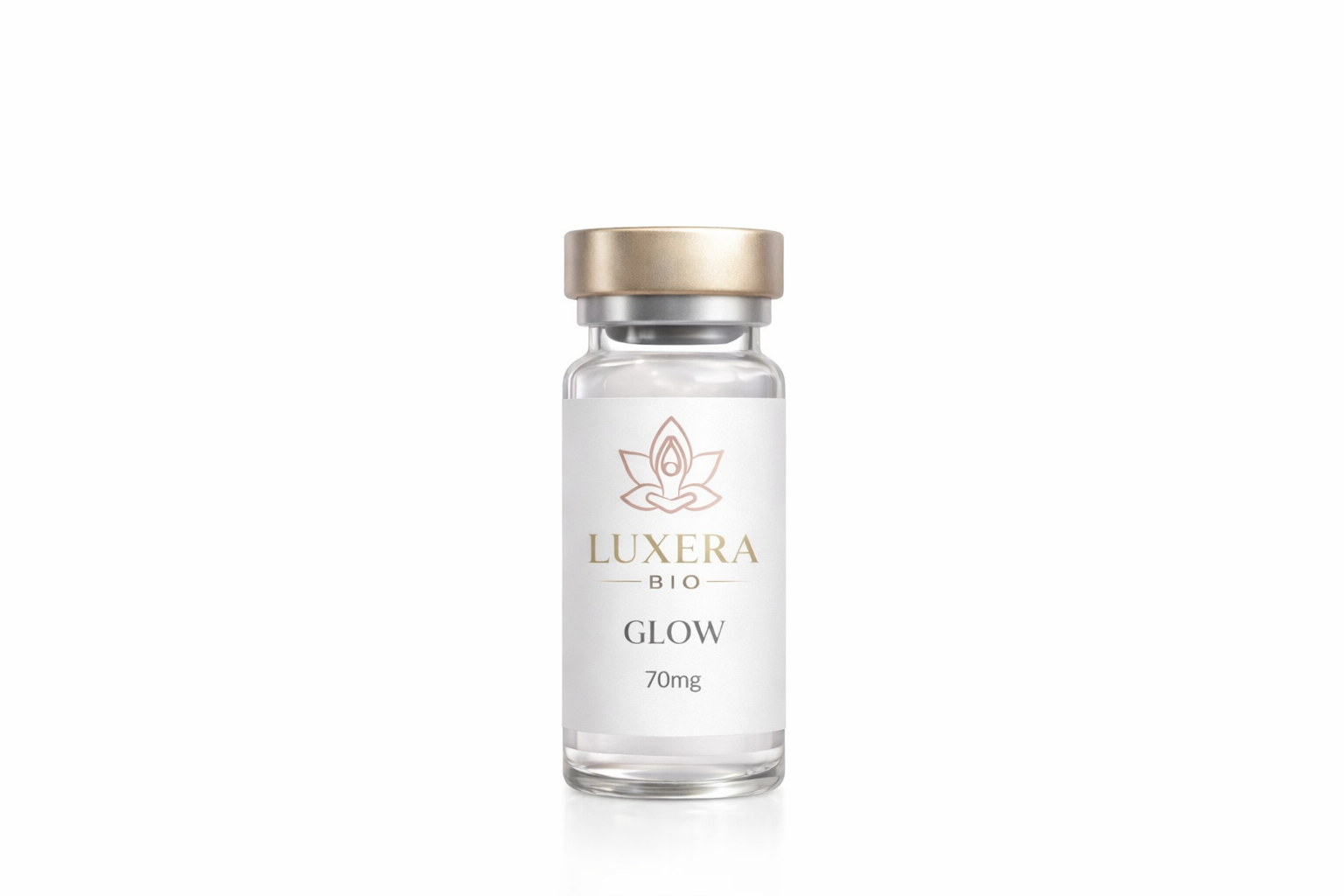
By combining GHK-Cu, TB-500, and BPC-157, GLOW leverages these synergistic pathways—collagen synthesis, cell migration, angiogenesis, and inflammation control—to create an optimal environment for tissue repair. The net result observed in research is faster wound closure, stronger tissue regeneration, and reduced fibrosis compared to normal healing processes.
The three peptides in GLOW operate via distinct but complementary biological pathways to enhance healing and repair. GHK-Cu acts as a genomic modulator—it can upregulate a broad array of genes related to tissue growth and downregulate those linked to inflammation and tissue breakdownNotably, GHK-Cu stimulates collagen and glycosaminoglycan synthesis in fibroblasts, promotes angiogenesis (formation of new blood vessels), and exhibits antioxidant and anti-inflammatory properties (for example, it suppresses NF-κB activity)These actions translate to improved wound contraction, tissue remodeling, and even anti-aging effects in skin.
TB-500 (Thymosin β4) primarily facilitates cell migration and cytoskeletal remodeling. After an injury, endogenous thymosin β4 is released by platelets and immune cells to protect tissues from further damageTB-500 mimics this by binding to actin, a key cell structural protein, and promoting the mobilization of cells to the injury site It thereby accelerates angiogenesis (new capillary growth) and recruits stem and progenitor cells, which aid in regenerating damaged tissues[4]. TB-500 also has anti-apoptotic effects (reducing cell death) and modulates immune cells to limit excessive inflammation and fibrosis. One outcome of this mechanism is reduced scar tissue formation and more organized healing in wounds
BPC-157 triggers a multi-factorial healing response. It is known to enhance growth factor signaling (e.g., increasing receptors for VEGF and PDGF) and upregulate nitric oxide pathways, leading to improved microcirculation in injured tissue BPC-157 also directly counteracts inflammatory mediators—it lowers pro-inflammatory cytokines and increases anti-inflammatory factors at injury sites . On a cellular level, BPC-157 promotes the migration and survival of repair cells (fibroblasts, endothelial cells, etc.). For instance, in tendon cells it activates the FAK-paxillin pathway to increase cell movement and adhesion for repair[ Additionally, BPC-157 supports the formation of new blood vessels (angiogenesis) similar to growth factors, helping deliver nutrients for regeneration.Through these mechanisms, BPC-157 has demonstrated accelerated healing in diverse tissues (muscle, tendon, bone, gut) in preclinical models.
By combining GHK-Cu, TB-500, and BPC-157, GLOW leverages these synergistic pathways—collagen synthesis, cell migration, angiogenesis, and inflammation control—to create an optimal environment for tissue repair. The net result observed in research is faster wound closure, stronger tissue regeneration, and reduced fibrosis compared to normal healing processes.